How to Store Your Jewelry Properly at Home
How to Store Your Jewelry Properly at Home
You get home, take off your necklace, and leave it on the dresser. The next day it is tangled with a bracelet, and one earring has disappeared under everything else. You do not need a large collection for this to happen. A simple, well-organized space can spare you scratches, knots, and the worry of searching for a piece you cannot find. Storing your jewelry well does not require an expensive box. What helps most is keeping pieces from rubbing against one another, choosing a suitable place, and creating a routine you can
actually follow.
Start by giving each piece some space
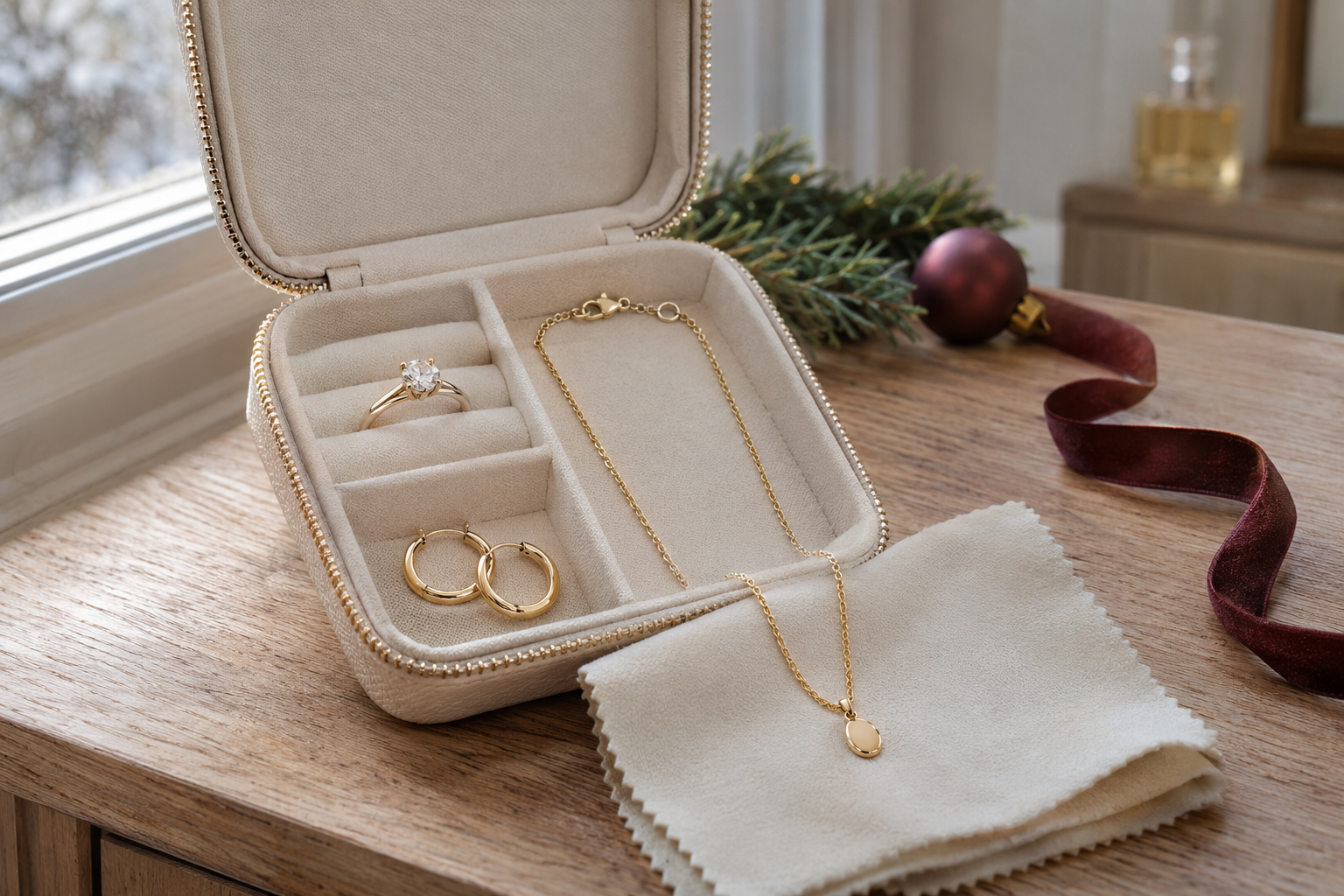
A diamond ring should not sit loose among pearls, colored stones, and chains. Contact between pieces can scratch softer materials and leave marks on metal, too. A jewelry box with separate sections, padded ring slots, or individual soft pouches works better than a drawer where
everything ends up in a pile. The original boxes your jewelry came in may also work, as long as they are clean and close properly. You do not have to buy a new organizer if you already have spaces that protect each piece. Make sure clasps, catches, and earring posts are not pressed against another item. When choosing a box, look at the inside before the outside. Its compartments should leave enough room so the jewelry is not crowded together. If you do not have one large box, several soft fabric pouches in a clean drawer can do the job. The important thing is to remove one piece without dragging the others along. That small difference can keep a chain from catching on a ring or a clasp from bending.
Give each chain its own place
Fine chains tangle easily. Fasten the clasp before putting a chain away, then lay it out gently in a long compartment or its own pouch. An organizer with hooks can work, too, if the chains hang separately and will not be knocked around each time you open a drawer or door. Avoid winding bracelets and layered necklaces too tightly. Delicate links can twist, and clasps are not made to carry the weight of other pieces. If a chain already has a knot, do not pull hard on both ends. Taking a little time to deal with it is easier than storing it tangled again.
Choose a steady spot away from steam
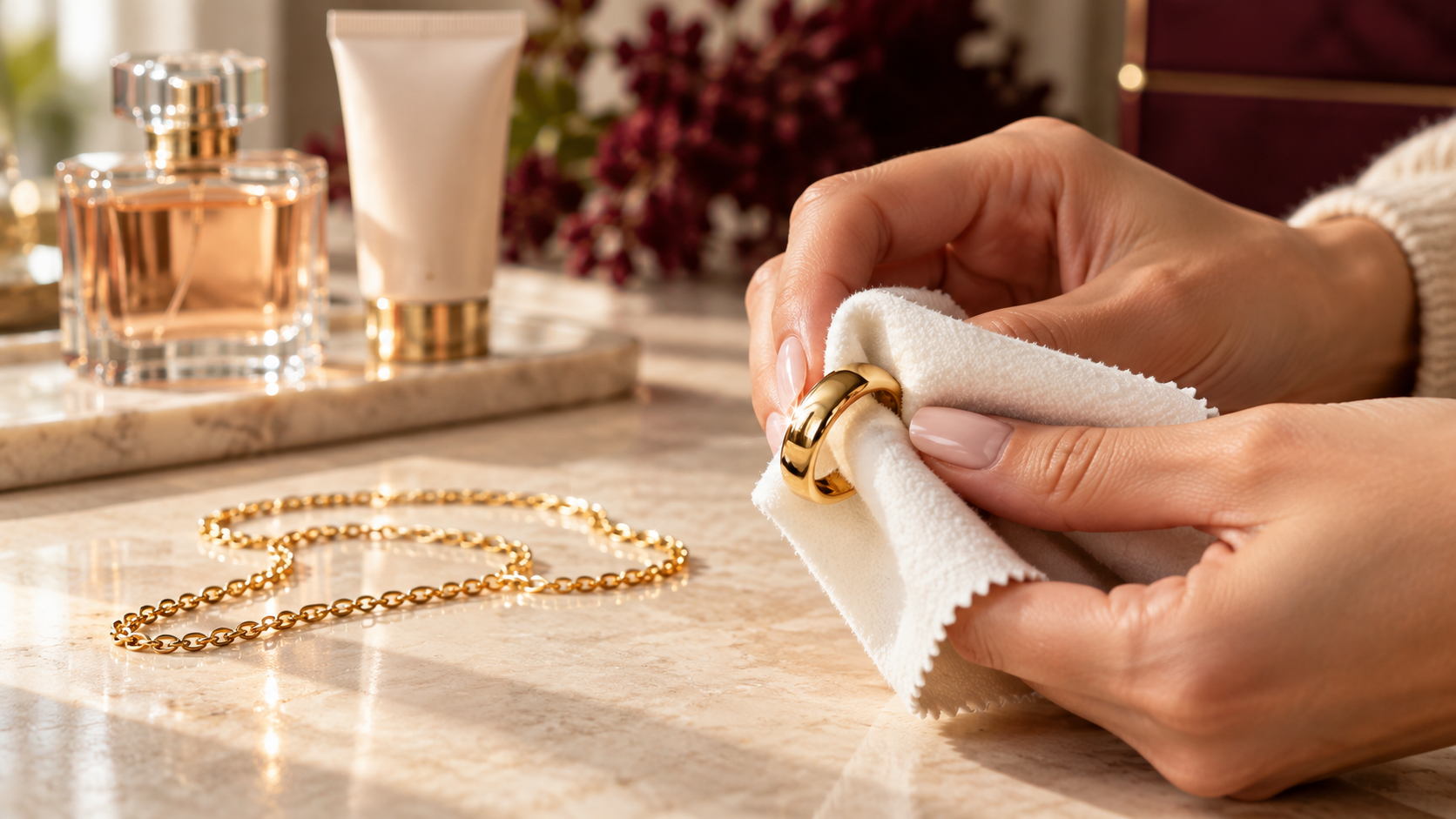
The bathroom seems convenient because that is where we get ready, but shower steam and changing humidity are not good companions for many kinds of jewelry. A drawer or dresser in a room with more stable conditions is a better choice. Keep it away from direct sunlight and from products such as perfume, lotion, and household cleaners. Before putting a piece away, make sure it is not still wet from cleaning or wearing it. When appropriate for the material, wipe it gently with a soft cloth and let it dry completely. Closing a box will not help if you place a damp chain or jewelry with product residue inside.
Silver and pearls need different care
Sterling silver can tarnish over time. Keeping it clean and separate in a suitable anti-tarnish pouch or cloth helps preserve its appearance between wearings. If the piece has gems or a special finish, ask before using a treated polishing cloth or applying a cleaning product directly to it. Pearls scratch easily, so give them their own soft space. Do not keep them in a plastic bag or in an extremely dry, hot place. Opals can also be affected by very dry conditions. That is why “the drier, the better” is not a rule for every piece of jewelry. The materials in each piece matter.
Keep earrings, rings, and special pieces organized
Keep each pair of earrings together, with the backs in the same space. If an earring has a post, do not let its tip rest against a stone or pearl. Rings can go in separate padded slots. An older piece or jewelry with raised details deserves its own box or pouch so nothing catches on it. Everyday jewelry needs a regular place, too. It might be a small compartment in the box that you can reach easily before leaving home. Then you are less likely to leave it each night beside the sink or on a table, where it can fall, get mixed with other objects, or disappear.
Organize the information as well
Take a clear photograph of important pieces and keep their receipts or appraisals somewhere separate. If you ever need to identify a piece, repair it, or check its details, that information will be useful. At home, keep higher-value jewelry in a secure place known only to the people who
need access. Once your jewelry has a place, keeping it organized takes very little time: each piece goes back where it belongs when you take it off. At El Centro Jewelry, we can help if you are unsure how to care for a particular material. In the next El Centro Journal article, we will talk about laser engraving and how to turn an object into a special keepsake. Join us every Tuesday and Friday, and tell us what you would like to read next.
Recent Posts