How We Professionally Resize a Ring
How We Professionally Resize a Ring
When someone leaves a ring with us to have it resized, what they see at pickup is usually a ring that fits again. Between those two moments, there is careful bench work worth explaining. A good repair shows in the comfort of the ring, the shape of its band, and the small details that remain in place. In the previous article, we talked about when a ring may need resizing. Today, we will show you what happens after you decide to bring your ring to El Centro Jewelry: how we prepare the job, what the jeweler does, and what we check before giving the ring back to you.
1. We document the ring as it arrives
Before working on the ring, we look at its condition. We note its current size, the requested size, the metal when it can be identified, the number of stones, and any detail we should keep in mind. An engraving inside the band, a distinctive sign of wear, or an earlier repair is part of that ring’s history. We also look for things that may be easy to miss: a worn area underneath the band, a stone that moves, or an old joint. If we find something, we discuss it with you first. It would be an unwelcome surprise to finish the resizing and only then discover that a stone was already loose or the band needed another repair.
2. We choose where and how to work
The bottom of the band is often the best place for a traditional resizing because it is usually free of stones and decoration. First, though, we need to check that there is enough metal and that the design allows us to work there. If an engraving crosses that area, we explain how the work could affect it. Stones call for the same kind of attention. A ring with one center diamond does not necessarily present the same challenges as a ring with small stones all around the band. Changing the circle can put pressure on the areas holding those stones. We choose the method for the ring in front of us, not from a photograph of a similar design. Before we begin, we explain the proposed size change, the finish we are aiming for, and any limitations. Some rings may need additional work or a different approach. We want you to make that decision with a clear idea of what result is reasonable to expect.
3. When the ring needs to be smaller
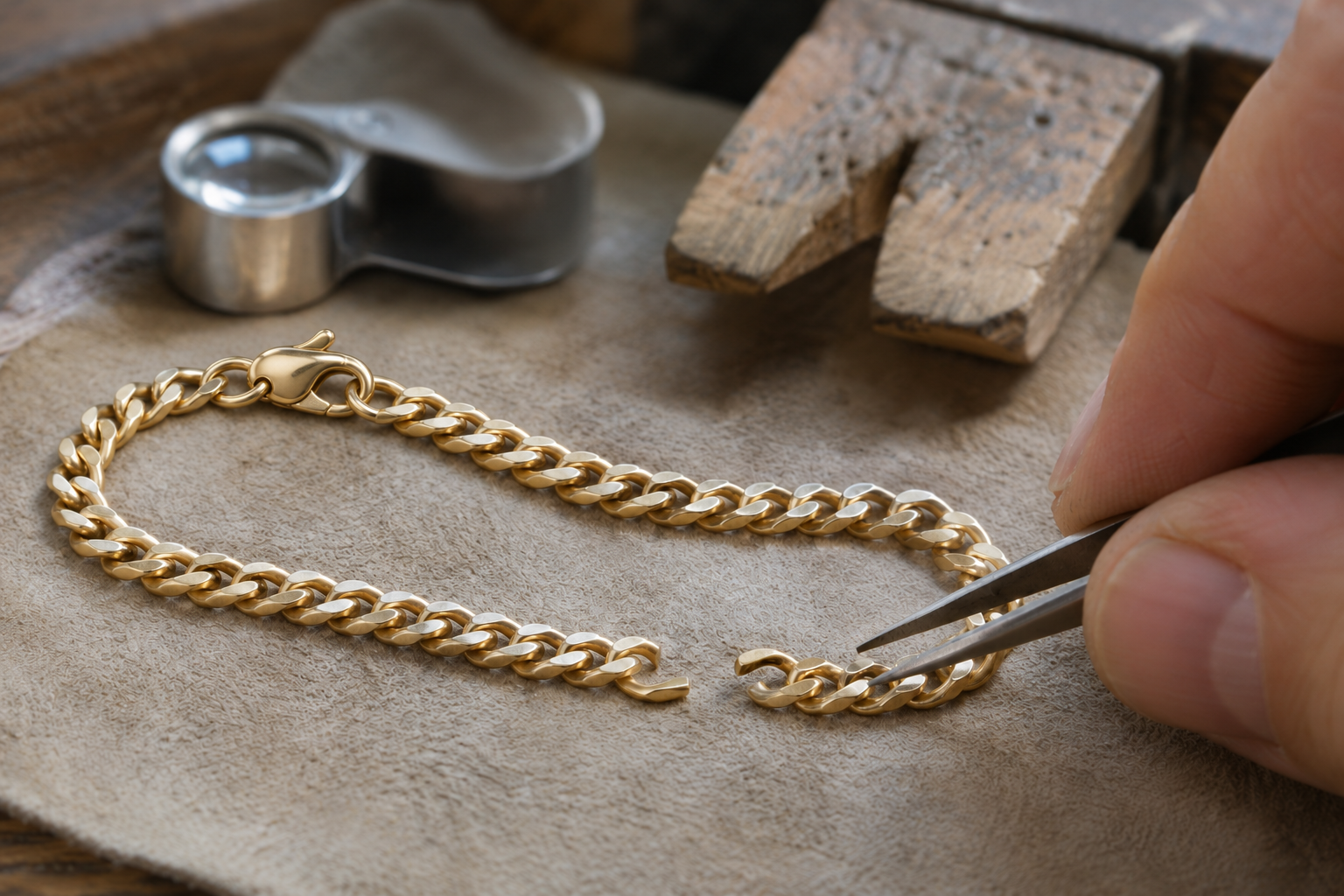
In a traditional size reduction, the jeweler removes a measured section of the band. The ends are brought together, carefully aligned, and joined with a process appropriate for the metal and the ring. This is more than squeezing a band with pliers: the ring must keep its shape, and the top must not end up crooked. After the joint is made, the ring is carefully brought back to an even circle. That shape matters as much as the size number. An oval band or a raised joint can feel uncomfortable even when a sizing tool shows the requested size. That is why we check the measurement again after the work.
4. When the ring needs to be larger
When the design allows it, one way to increase the size is to open the band and add a small section of suitable metal. The jeweler prepares that section to match the width and thickness of the band, joins it in place, and restores the shape. Adding metal means working carefully on both sides of the new section so it becomes part of the ring. Not every ring can be enlarged in the same way, and not every size change is possible. The metal, the construction, and the distance between the work area and the stones all matter. If a
stone or another part of the ring could be affected, we take appropriate precautions. In some cases, removing it first or proposing another solution may be best.
5. We restore the finish
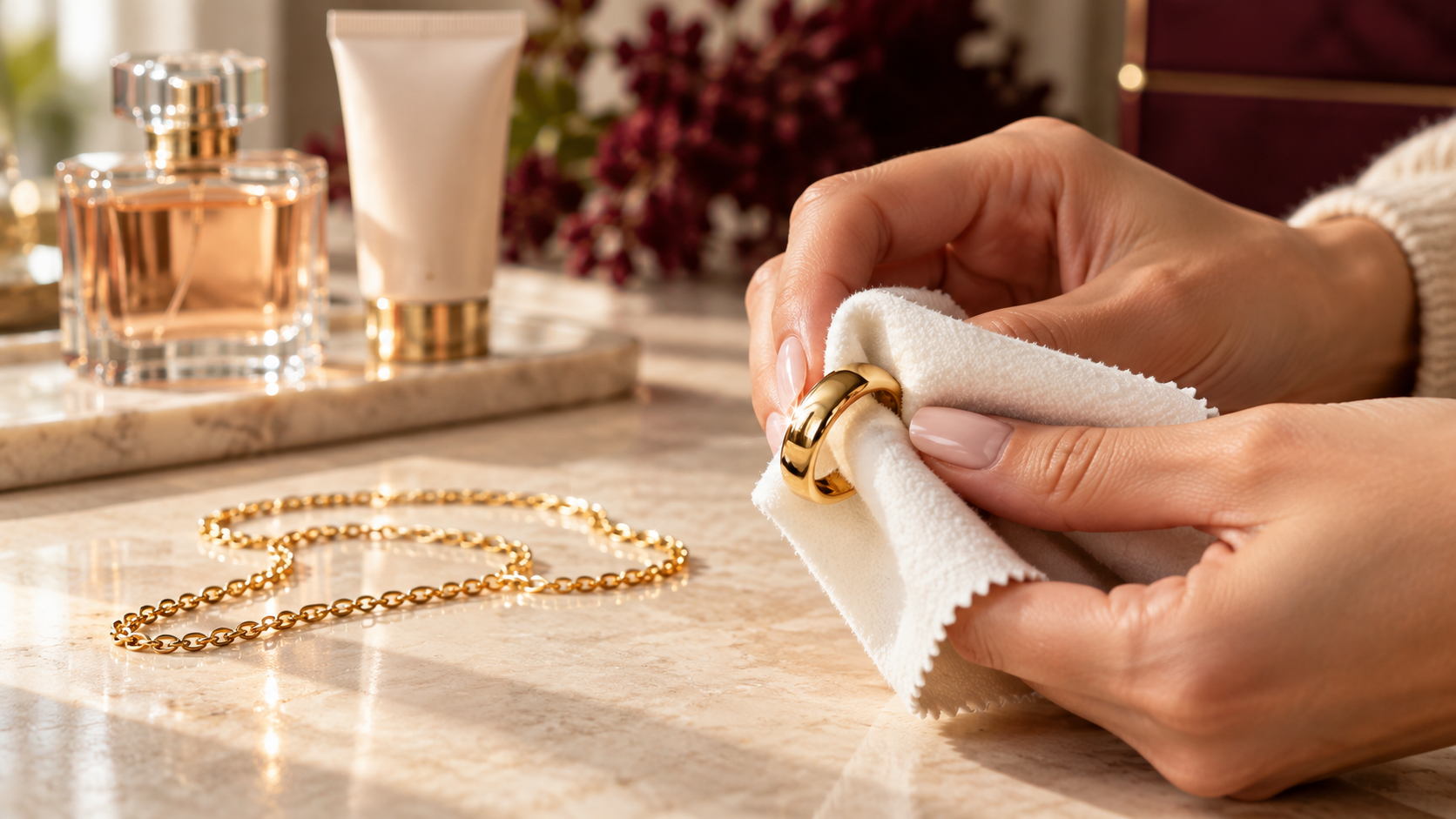
We smooth the joint so the inside of the band does not rub against your skin. Then we work on the outside to suit the ring’s original finish. If it was polished, we aim for a uniform appearance. If it has texture, defined edges, or antique details, we take extra care to preserve what gives it character. The goal is not to make every piece look brand new. Sometimes a customer wants to keep the normal signs of wear on a family ring. We discuss that before polishing because a texture or engraving worn away during finishing cannot always be restored exactly as it was.
6. We make a final inspection
Before pickup, we check that the size matches what we agreed on, the circle is even, and the worked area feels comfortable. We also inspect the stones and their settings, especially when they are close to the band. A repair is not complete simply because the joint looks good. When you pick up the ring, you can try it on and look at the resized area with us. If you have questions about a stone, an engraving, or the finish, this is a good time to ask. We want you to understand what was done to your ring and feel confident wearing it.
Every ring has its own needs, but care at each of these stages matters. At El Centro Jewelry, we do repairs inside our store and explain the recommended work before it begins. In the next El Centro Journal article, we will talk about why diamonds and other stones can come loose. Join us every Tuesday and Friday, and send us the questions you would like us to answer in a future article.
Recent Posts